I’ve walked through enough snag lists in my twelve years in the London fit-out game to know the smell of a bad decision. You’re standing in the middle of a venue that looked like a million pounds on opening night, but three months in, the floor is commercial floor slip test pendulum a disaster. It’s tacky, it’s slippery, and the staff are terrified of a workplace injury claim every time they move a keg.
I’ve heard it a thousand times from bar owners: "We mop it every night, we use the heavy-duty detergent, but it’s still like an ice rink behind the bar." My immediate response? What happens behind the bar on a Saturday night? You’ve got sticky spillage, crushed fruit, condensation from the glass wash, and heavy foot traffic wearing down microcement vs polished concrete restaurant the finish. If your floor isn't specced for that, you’re just pushing dirt around a surface that was never designed to hold up to the pressure.
The "Residential Grade" Trap
Let’s be blunt: if you picked your flooring from a showroom that also sells to homeowners renovating their kitchens, you’ve probably already lost the battle. I constantly see "opening-week materials"—tiles that look sharp and modern but fail fast under the weight of a commercial operation.
Residential-grade products are designed for the occasional spill of a glass of wine. They are not designed for the concentrated, repeated chemical exposure of bar cleaning agents, the physical weight of heavy refrigeration units, or the constant ingress of street debris. When you install residential flooring in a high-traffic bar, the micro-pores in the surface become clogged with fats and sugars. You mop, you push that slurry into the pores, it dries, and you’re left with a permanent "sticky residue corner" that becomes the leading cause of slips when the next pint hits the deck.
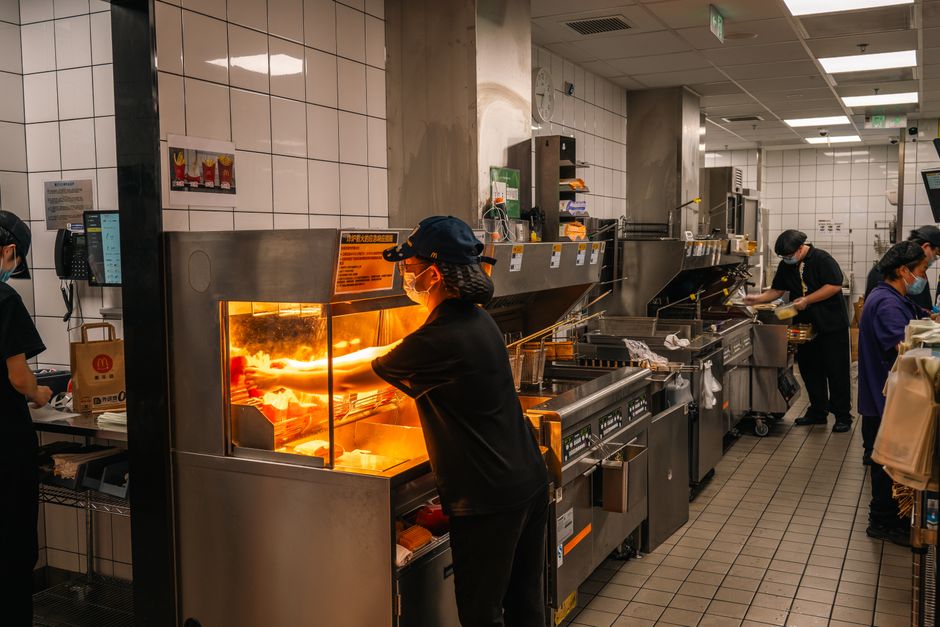
Understanding Slip Resistance: The DIN 51130 Standard
If your designer didn't bring up the DIN 51130 standard, they’ve failed you. In the UK, we often take for granted that the product we buy is "non-slip." But "non-slip" is a marketing term; wet slip resistance is a technical reality.
The DIN 51130 standard measures the slip resistance of floor coverings in workrooms and work areas where there is a risk of slipping due to oil or other contaminants. This is measured by an 'R' rating:
I see so many sites trying to get away with R9 or R10 in a bar. It’s an under-specced transition zone waiting to happen. The moment you move from the front-of-house to the bar station, you need that jump to R11 or R12. If you don’t, you aren’t just failing to clean; you are fighting the physics of a material that is literally holding onto every drop of spill.
The "Easy Clean" Lie and Grout Lines
I have a personal vendetta against architects who insist on tiled floors for bars because they look "authentic." Have you ever looked closely at the grout lines behind a bar after six months? They are black. They are porous. They are, quite frankly, a biological hazard.
When you have thousands of grout lines, you have thousands of microscopic reservoirs for bacteria and grease. The Food Standards Agency has strict guidelines regarding the cleanability of surfaces in food and beverage prep areas. If your flooring isn’t non-porous and seamless, you are technically struggling to meet basic hygiene compliance. Even if you use a high-pressure mop, you’re just spreading the bacteria from one tile to another. The grout acts as a dam, trapping the soapy water. The result? A "cleaned" floor that is actually slicker than when you started.
The Solution: Seamless Resin Systems
Whenever I consult on a new project or a rescue mission for a struggling site, I point them toward professional-grade resin solutions like Evo Resin Flooring. Why? Because resin is the enemy of the "sticky residue corner."
A high-quality resin floor isn't just a coating; it’s a total seal. Because it’s poured as a liquid, it creates a seamless membrane that doesn’t just cover the floor—it travels up the walls, creating a coved junction. This is critical. Most of the "snag list" issues I see involve debris building up in the 90-degree corner where the floor meets the wall. A coved resin floor allows your staff to actually pull a squeegee across the entire surface and push the water into a drain without it hiding in the corners.
Why Resin Wins for Safety:
- Chemical Resistance: It doesn't break down when exposed to acidic citrus or cleaning agents. Non-Porous: Nothing gets inside. If it doesn't get inside, it can't sit there and turn into a slip hazard. Customisable Profiles: You can dial the slip resistance up in the wet zones (like the glass wash area) and smooth it out in the low-traffic aisles.
Sector-Specific Reality Check
It’s not just bars. I’ve seen this exact issue in barbershops, where hair and styling products create a slick, dangerous cocktail. I’ve seen it in restaurants, where the transition from the dry, polished dining room to the oily kitchen is ignored.
If you are ignoring wet zones and pretending one floor suits the whole site, you are wasting your money. You need a transition plan. Your floor needs to be graded for the task. Behind the bar safety isn't just about insurance; it’s about the speed and efficiency of your team. If they are walking like they are on ice, they aren’t serving drinks. They’re protecting their ankles.
Final Checklist: How to Fix Your Floor
If you’re tired of the slip-and-slide, stop buying "easy-clean" floor cleaners and start auditing your hardware. Here is what I tell my clients to do:
Audit your current R-rating: Do you even know what you have installed? If it’s R9 or R10, stop trying to clean it—it’s time to cover it or replace it. Check your junctions: Are your corners square? If so, rip out the sealant and get a coved solution installed immediately. Kill the grout: If you have tiles with grout lines deeper than 1mm, you are fighting a losing battle. Consider an industrial-grade epoxy or polyurethane resin overlay. Consult a professional: Don't ask a general builder. Ask someone who specialises in commercial industrial flooring. Companies like Evo Resin Flooring understand the specific needs of hospitality environments—they aren't just selling you a product; they are selling you a system that complies with the Food Standards Agency guidelines.Ultimately, a commercial floor should be the most boring thing in your bar. If you’re noticing it, it’s failing. If you’re slipping on it, it’s a liability. Stop treating your venue like a domestic kitchen—it’s a commercial plant, and it needs industrial protection. Do it once, do it right, and stop worrying about what’s going to happen when that pint hits the deck on a Saturday night.